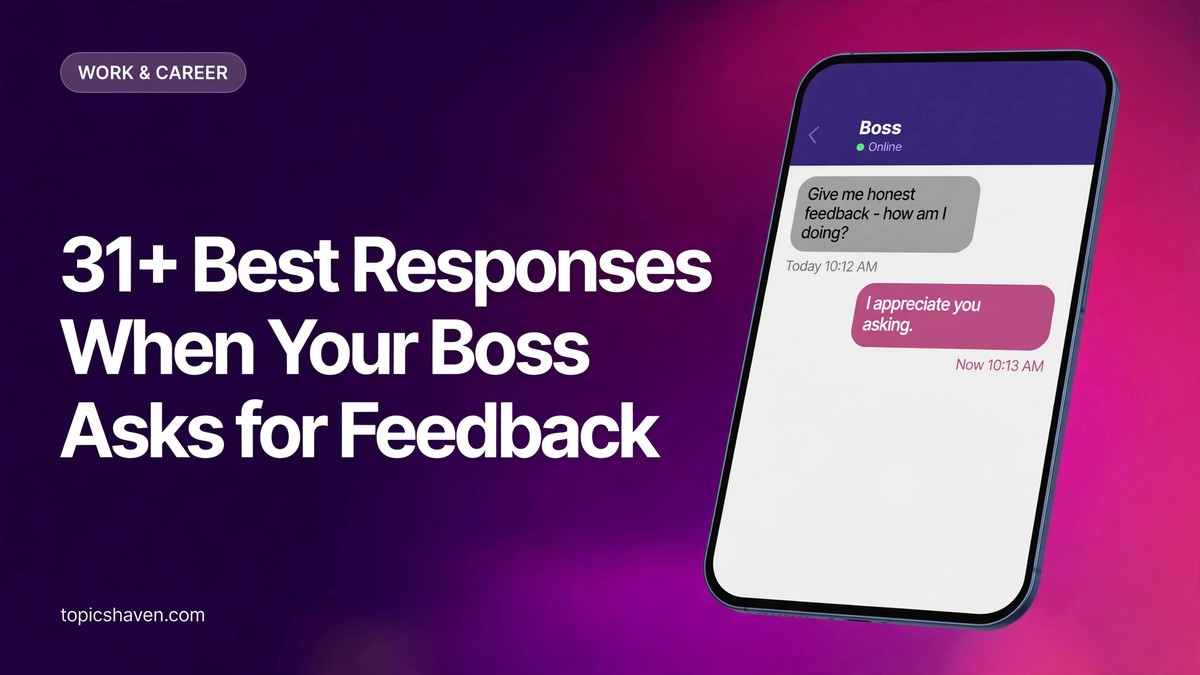
31+ Best Responses When Your Boss Asks for Feedback (100+ Examples)
“So, how do you think I’m doing as your manager?” Your stomach drops. Be too honest and you risk your job; say “everything’s great” and you waste a rare opportunity. The best responses when your boss asks for feedback are honest, specific, and kind: “I appreciate you asking, one thing that would help me is…,” “Can I think on it and share tomorrow?” or “The weekly check-ins have been great for me.” Below are 22 copy-and-paste scripts for giving upward feedback safely, from safe openers to tactful hard truths.
📌 Jump to
- The Safe-Honest Opener
- Giving Real Upward Feedback
- When You Need Time to Think
- Keeping It Positive
- When the Truth Is Uncomfortable
The Safe-Honest Opener
Start by appreciating the ask. It buys you goodwill and a few seconds to think, both are valuable.
- “I really appreciate you asking, that says a lot about you as a manager.”
- “Thanks for opening the door to this. I’d love to share a thought.”
- “I’m glad you asked. Is now a good time for something honest?”
- “That means a lot. Give me a second to gather my thoughts.”
- “Honestly, the fact that you’re asking is already a great sign.”
Giving Real Upward Feedback
Real feedback is specific, behavioral, and framed as your experience, never as a verdict on their character.
- “One thing that would help me: clearer priorities when everything feels urgent.”
- “In our last project meeting, I noticed decisions got revisited a few times. Locking them in earlier would help.”
- “I do my best work with a little more heads-up on deadlines, even a day helps.”
- “When feedback comes right after a win too, not just mistakes, it keeps me motivated.”
- “Could we try a quick weekly check-in? Even fifteen minutes would keep me aligned.”
When You Need Time to Think
Never improvise upward feedback on the spot. Asking for time is smart, not evasive.
- “Can I think on it and share something thoughtful tomorrow?”
- “I’d rather give you a real answer than a rushed one, can we revisit this Friday?”
- “Let me reflect and bring you two or three honest thoughts next week.”
- “I want to do this well. Mind if I send you my thoughts in writing?”
Keeping It Positive
Sometimes the honest answer is genuinely good. Say it specifically, vague praise helps no one.
- “Honestly, the weekly check-ins have been great for me, please keep those.”
- “You give clear direction and then trust me to run with it. That’s rare.”
- “I feel supported here, and that starts with you.”
- “The way you handled the last crunch showed real leadership. More of that.”
When the Truth Is Uncomfortable
For the hard stuff, use the behavior-impact-request formula: what happened, how it affected you, what you’d like instead.
- “You may not have realized, when plans change last-minute, it throws my whole week. A heads-up would help.”
- “In yesterday’s meeting I felt cut off mid-point. I’d love space to finish my thoughts.”
- “I know you mean well, but public criticism lands hard on me. Private feedback works better.”
- “My intention is for us to work better together: clearer timelines would make a big difference for me.”
Tips for the Perfect Reply
- Be specific or be silent: “Communication could improve” is useless. “A heads-up on deadline changes would help me” is gold. Specifics are safe; vague complaints sound like attitude.
- Frame it as your experience: “I felt…” and “I noticed…” keep it about observable behavior. “You always…” and “You never…” make it about character, and start fights.
- Ask permission first: Even when they asked, check: “Is now a good time for something candid?” It gives them a second to brace, and makes them far more receptive.
- Do it privately: Never give your boss critical feedback in front of others. Private praise, private critique, no exceptions.
- End with gratitude: Close with “Thanks for listening, it makes me proud to be on this team.” It seals the conversation on warmth, whatever you said before it.
- Study the upward-feedback playbook: Leadership coaches at Radical Candor explain how to give your boss feedback without fear, the golden rules: do it now not later, stick to facts, and never make it about who they are.
- Balance honesty with grace: If you ever freeze mid-conversation, our responses for when you don’t know what to say will get you unstuck.
Frequently Asked Questions
Should I be 100% honest when my boss asks for feedback?
Be honest about behaviors and your experience, but choose your battles. Share feedback that helps you both work better, not every irritation needs airtime. Honest, kind, and useful beats brutally honest every time.
What if my boss gets defensive about my feedback?
Stay calm and clarify your intent: “I’m sorry you’re upset, my goal is for us to work better together, not to criticize.” If they stay heated, suggest revisiting later. Some bosses need time to digest.
Is it a trap when my boss asks for feedback?
Usually not, most managers genuinely want to improve. But read the room: if your boss has punished honesty before, keep it light and positive. Trust is earned, and you don’t owe vulnerability to someone who hasn’t earned it.
Final Thoughts
Being asked for feedback is a compliment, it means your voice matters here. Be specific, be kind, and always do it privately. And when the tables turn and praise comes your way, our guide on responses when your boss compliments you shows how to accept it gracefully, plus the free Reply Finder tool at Topicshaven is always there when you’re stuck for words.
Leave a Reply