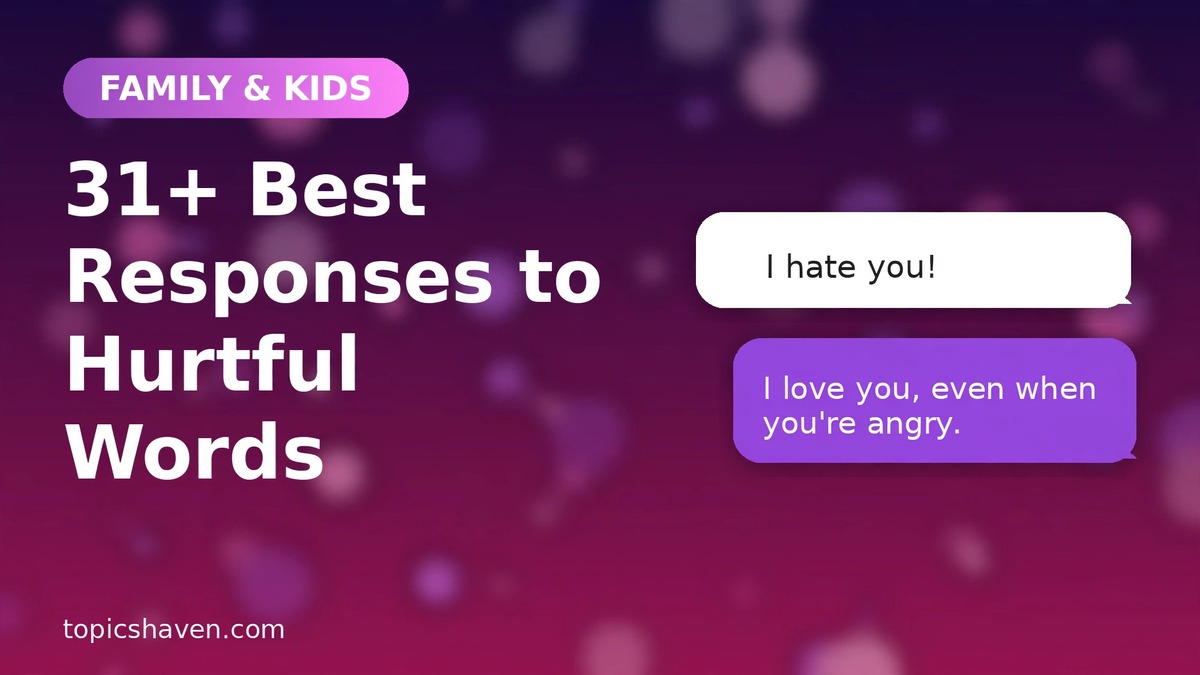
31+ Best Responses When Your Child Says Hurtful Things (100+ Examples)
“I hate you!” lands like a punch no matter how many parenting books you’ve read, so here are the 31+ Best Responses When Your Child Says Hurtful Things (100+ Examples), written to help you stay calm, steady, and loving in the moment. These aren’t punishments or clever comebacks; they’re therapist-informed lines that name the feeling, hold the boundary, and keep your connection safe. And when the words come from someone else’s mouth, these responses when someone says something mean have you covered.
📌 Jump to
- Calm Replies for “I Hate You”
- Replies When They’re Lashing Out in Anger
- Loving Replies That Teach Feelings Words
- Replies for Hurtful Words in Public
- Short Replies to Stay Steady
Calm Replies for “I Hate You”
The words sting, but they’re not a verdict on your parenting. These replies keep your voice steady and your love unmistakable, even when your child is at their worst.
- “I love you, and I’m still right here.”
- “You don’t have to like me right now. My love doesn’t change.”
- “Those are big, angry words. I can hear how upset you are.”
- “I’m not going anywhere, even when you’re this mad at me.”
- “I hear you. We can talk about it when you’re ready.”
Child: “I hate you! You never let me do anything!”
You: “Those are big, angry words. I can hear how upset you are. I’m still right here.”
Replies When They’re Lashing Out in Anger
When the yelling starts, your calm is the anchor. These lines lower the temperature without backing down or escalating the fight.
- “I can see you’re really angry. That’s okay, I’m listening.”
- “Take your time. I’ll sit here with you until the storm passes.”
- “You sound frustrated. Tell me what feels the hardest right now.”
- “I’m staying calm because this relationship matters to me.”
- “It’s okay to be mad. It’s not okay to be mean, and I’ll help you find better words.”
Loving Replies That Teach Feelings Words
Most hurtful words come from feelings a child can’t name yet. These gentle replies give them the vocabulary they were reaching for.
- “Instead of ‘I hate you,’ try ‘I’m really mad at you.’ I can hear that better.”
- “Sounds like you feel disappointed. Am I getting that right?”
- “When you’re calm, we can find the words together.”
- “I love you too much to argue. Let’s name the feeling and talk it through.”
Child: “You’re the worst! I wish you weren’t my parent!”
You: “It’s okay to be mad. Try saying ‘I’m really mad at you’, I can hear that better.”
Replies for Hurtful Words in Public
An outburst at the grocery store or in front of relatives adds embarrassment to the pain. These replies protect both of you, no shaming, no scene, just a bridge to later.
- “I know you’re upset. Let’s talk about this in the car.”
- “Those words hurt, but I know you don’t mean them. We’ll figure this out at home.”
- “I can tell you’re embarrassed and angry. I’m still on your team.”
- “Let’s press pause and finish this conversation where we have some privacy.”
Short Replies to Stay Steady
Sometimes the bravest response is the shortest one. Keep these in your back pocket for the moments your brain goes blank.
- “I’m here.”
- “Still love you.”
- “Take a breath with me.”
- “We’ll get through this together.”
Tips for the Perfect Reply
- Don’t take it personally: “I hate you” from a flooded child is a distress signal, not a performance review. Child psychologists call this Q-TIP, Quit Taking It Personally, and it’s the single most useful habit for hard moments, as this Child Mind Institute guide on tantrum responses explains.
- Pause before you speak: You don’t have to answer in the same second. One slow breath buys your thinking brain time to catch up and keeps your voice from becoming the second storm.
- Repair after the storm: Once everyone is calm, circle back. A short “Earlier got rough, I’m sorry I raised my voice too. I love you” teaches more than any lecture. If you slipped, model the apology you’d like them to give.
- Teach the words when they’re calm: Hand them the better script later, not mid-meltdown. “Next time you feel that way, you can say ‘I’m furious with you’” gives them language they didn’t have in the moment.
- Hold the boundary with warmth: The screen time limit or bedtime can stay while your love stays. “The rule stays because I love you and my job is to keep you safe” separates the limit from the relationship.
- Get support if it’s a pattern: An occasional outburst is normal, but if hurtful words are daily, escalating, or paired with aggression, talk to your pediatrician or a family therapist. Asking for help is strength, not failure.
Frequently Asked Questions
Why does my child say “I hate you” when they’re angry?
Because they have big feelings and a small vocabulary. Young children’s emotional brains develop years before their language for emotions does, so “I hate you” becomes a shortcut for “I’m furious, overwhelmed, and I don’t know what else to say.” It also means they feel safe enough with you to show their worst, which, strange as it sounds, is a sign of a secure bond.
Should I punish my child for saying hurtful things to me?
Not in the heat of the moment. Punishment or lectures during a meltdown just escalate things, their thinking brain is offline and can’t absorb the lesson. Wait until everyone is calm, then set the expectation kindly: “It’s okay to be angry, but it’s not okay to say ‘I hate you.’ Here’s what you can say instead.” Connection first, correction second.
What should I do if my child says hurtful things in front of other people?
Stay calm and keep it brief, don’t shame them in front of an audience. A simple “I know you’re upset. Let’s talk about this in the car” ends the scene without a power struggle. Handle the real conversation later in private, when neither of you is performing for anyone.
Final Thoughts
Your child’s worst words are spoken in their worst moments, and your steady love in those exact moments is what they’ll remember years from now. Pick one or two replies that sound like you, practice them out loud, and trust that staying calm is never the same as giving in. For those rare moments when you truly freeze and need the right words fast, these responses when you don’t know what to say have your back. And for every other tricky conversation life throws at you, the free Reply Finder tool at Topicshaven is always there.
Leave a Reply