Blog

  • 32+ Best Responses When Your Child Lies (100+ Examples)

    32+ Best Responses When Your Child Lies (100+ Examples)

    32+ Best Responses When Your Child Lies (100+ Examples)

    Finding out your child isn’t telling the truth can rattle even the calmest parent, so here are the 32+ Best Responses When Your Child Lies (100+ Examples), calm and practical replies that teach honesty without shame. Research shows kids lie to avoid trouble or disappointment, not because they’re “bad”, early lying is even a normal cognitive milestone. These replies help you stay curious instead of accusatory, give your child a do-over, and make the truth the easy choice. If the lying comes with attitude, these responses when your child is disrespectful can help with that too.

    πŸ“Œ Jump to

    Stay Calm First Replies

    The first response to a child who lies sets the tone for everything after. Staying calm tells them honesty is safe here, and that’s what makes them brave enough to tell the truth next time.

    1. “Thank you for telling me. Now, do you want to try that again?”
    2. “I’m not mad at you. I just need the true story so I can help.”
    3. “I wonder if you’re worried I’ll be upset. Talk to me honestly.”
    4. “Let’s take a breath. I’d rather hear the truth than a perfect story.”
    5. “You don’t have to be scared to tell me the truth. I’ll listen.”

    Do-Over Replies: 32+ Best Responses When Your Child Lies (100+ Examples)

    Accusations back kids into a corner; a do-over opens a door. These lines hand your child a fresh chance to tell the truth, no shame attached.

    1. “That was your first try. Want a do-over and tell me what really happened?”
    2. “I think there’s more to the story. Try again, honestly this time.”
    3. “No trouble for telling the truth. Let’s rewind and start over.”
    4. “I can see you’re thinking hard. Give it one more try with the truth.”
    5. “It’s okay to change your answer. I’d love to hear the real one.”

    Here’s what it sounds like in real life:

    Child: “I didn’t eat the cookie. The dog did.”
    You: “Hmm, there are crumbs on your shirt. Want a do-over? The truth is always safe with me.”

    Praise the Truth Replies

    When your child finally tells the truth, that moment deserves celebrating. Praising honesty teaches them that telling the truth feels better than hiding it.

    1. “That was brave of you to tell the truth. I’m really proud of you.”
    2. “See? The truth wasn’t so scary. Thank you for being honest.”
    3. “I love that you told me. Honesty makes me trust you more.”
    4. “That took courage. I’d always rather hear the truth from you.”

    Address the Fear Replies

    Most of the time, your child is lying because they’re afraid, of trouble, of your disappointment, of losing your love. Speaking to that fear is how you stop the lying at its root.

    1. “Are you worried about getting in trouble? Tell me, and we’ll figure it out together.”
    2. “It sounds like you’re afraid I’ll be disappointed. I can handle the truth.”
    3. “What matters more than the mistake is that you told me about it.”
    4. “I’m glad you’re telling me. Nothing you say will make me love you less.”

    Another real moment:

    Child: “If I tell you, you’ll ground me.”
    You: “I can’t promise there won’t be a consequence, but the truth will always be the easier path. So, what really happened?”

    Short One-Line Replies

    Sometimes a single sentence does the whole job. These short replies keep you steady when your child lies to you and you need the truth fast.

    1. “Try that one again, with the truth.”
    2. “Honesty first. Always.”
    3. “I believe you can tell me the real story.”
    4. “The truth is safe with me.”

    Tips for Teaching Honesty Without Shame

    • Stay calm before you speak: Your tone teaches more than your words. When kids lie, a steady voice tells them the truth won’t be met with an explosion.
    • Never label your child “a liar”: Labels stick and become identity. Say “that wasn’t the truth” instead of “you’re lying”, you correct the behavior, not the child.
    • Offer a do-over, not an interrogation: Asking “Are you SURE that’s what happened?” traps them. Saying “Want to try again?” gives them a way out that leads straight to honesty.
    • Make honesty the path of least resistance: When the punishment for the mistake feels smaller than the punishment for lying, kids choose the truth. This psychologist’s guide to why children lie explains the science behind what really motivates children to fib.
    • Praise truth-telling the second it happens: The moment your child tells the truth, even an ugly truth, celebrate it. That reward loop is what builds an honest habit over time.
    • Talk it through later, when everyone is calm: In a quiet moment, ask what made the lie feel necessary. Those calm conversations teach more about honesty than any lecture in the heat of the moment.

    Frequently Asked Questions

    Why does my child lie even when I’ve caught them?

    They’re usually trying to dodge trouble or your disappointment, not trying to fool you, and sometimes wishful thinking or storytelling gets mixed up with the facts. Saying “I wonder if you’re afraid I’ll be mad” works far better than an accusation, because it names the feeling driving the lie.

    Should I punish my child for lying?

    Harsh punishment for lying tends to create better liars, not more honest kids, it raises the stakes of telling the truth. Keep a calm consequence for the underlying behavior, but reward the honesty itself every single time it shows up.

    What if my child keeps lying no matter what I try?

    A lying pattern usually points to a fear cycle: the child expects a big reaction, so they hide more. Break the cycle by staying calm, shrinking the fear of consequences, and talking in a peaceful moment about why telling the truth matters.

    Final Thoughts

    Your child isn’t a bad kid, they’re a learning one, and every do-over you offer is a lesson in honesty they’ll carry for life. Pick the replies that fit your voice, stay curious instead of furious, and watch the truth get easier for them over time. If the fibs come with backtalk, these responses when your child says you are mean have you covered. And when the tension gets loud, these responses when someone is angry show you how to bring it down. For any tricky parenting moment, the free Reply Finder tool at Topicshaven has your back.
  • 25+ Best Responses When Your Child Comes Out (100+ Examples)

    25+ Best Responses When Your Child Comes Out (100+ Examples)

    25+ Best Responses When Your Child Comes Out (100+ Examples)

    The moment your child comes out to you is one of the biggest moments of their life, so here are the 25+ Best Responses When Your Child Comes Out (100+ Examples), written for parents who want to get this right. These are warm, affirming things to say when your child tells you they’re LGBTQ, built on love, gratitude for their trust, and listening instead of lecturing. Because when someone hands you something this personal, how you respond matters, these responses when someone tells you how you feel can guide you through other heartfelt conversations too.

    πŸ“Œ Jump to

    Lead With Love: Your Very First Words

    The first thing out of your mouth sets the tone for everything after. Lead with love and gratitude, questions, feelings, and logistics can all wait for later.

    1. “I love you, and nothing you just told me changes that.”
    2. “Thank you for telling me. I know that took real courage.”
    3. “You will always be my child, and I will always be on your team.”
    4. “I’m so glad you trusted me with this.”
    5. “My love for you is bigger than anything, this doesn’t change a single thing.”

    Thank Them for Trusting You

    Coming out to a parent takes enormous trust. Naming that trust out loud tells your child their bravery was seen, and that your home is safe.

    1. “It means the world to me that you felt safe enough to tell me.”
    2. “You never have to hide who you are in this house.”
    3. “I’m honored you chose me to share this with.”
    4. “This doesn’t change how proud I am of you, not one bit.”
    5. “You are still exactly the wonderful person I’ve always known.”

    Here’s what it sounds like in real life:

    Child: “Mom, I’m gay. Please don’t be mad.”
    You: “I’m not mad, I’m grateful you told me. I love you exactly as you are.”

    Listen First, Advise Later

    Your child doesn’t need a lecture or a plan right now, they need to be heard. Ask gentle questions, then put your own reactions on hold and just listen.

    1. “I want to hear everything, tell me as much or as little as you want.”
    2. “I’m here to listen. This is your story to tell.”
    3. “What do you need from me right now?”
    4. “You set the pace here. I’ll follow your lead on who else knows.”

    Another real moment:

    Child: “What if Dad doesn’t accept me?”
    You: “Then we’ll figure it out together. You don’t have to carry this alone.”

    Affirm Their Identity Every Day

    Support doesn’t end with one conversation. Small, steady affirmations, a correct pronoun, a kind note, little responses to thinking of you moments, keep the love visible long after the big talk.

    1. “I’ll use your name and pronouns, and please correct me anytime I slip.”
    2. “Who you are is not a phase, and I’ll never treat it like one.”
    3. “I’m still learning, and I might mess up, but I will keep trying.”
    4. “Your happiness matters more to me than any expectation I ever had.”

    Short and Sweet: 25+ Best Responses When Your Child Comes Out (100+ Examples)

    When words feel hard to find, keep it simple. One honest sentence, said with love, is more than enough.

    1. “I’ve got you. Always.”
    2. “Nothing about my love has changed.”
    3. “Thank you for trusting me.”
    4. “You’re perfect to me, exactly as you are.”

    Tips for Supporting Your Child After They Come Out

    • Say “I love you” first, questions later: Research and LGBTQ advocates agree the two most powerful opening lines are “I love you” and “Thank you for telling me.” Everything else, your questions, your feelings, can wait until your child feels safe.
    • Listen more than you talk: This is their news, not your moment to process out loud. Ask what they need, then give them room to answer. Quiet, steady listening says “you matter” louder than any speech.
    • Don’t out them, let them set the pace: Who else knows, and when they find out, is your child’s decision alone. Never share their news with family, friends, or school without their clear permission.
    • Use their chosen name and pronouns: Getting the name right is one of the simplest, strongest ways to show respect. If you slip, correct yourself briefly and move on, no long guilty speeches needed.
    • Process your own fears with other adults: It’s normal to feel surprised, worried, or sad about the future you pictured. Work through those feelings with a partner, a counselor, or a parent support group, never by leaning on your child. PFLAG Canada’s FAQ for parents of LGBTQ kids is a warm, judgment-free place to start.
    • If you stumble, repair is possible: Said the wrong thing in the shock of the moment? Go back, apologize simply, “I’m sorry, that came out wrong. I love you and I’m glad you told me”, and do better. Kids remember the repair even more than the mistake.

    Frequently Asked Questions

    What should I say first when my child comes out to me?

    Start with “I love you” and “Thank you for telling me.” Those two sentences cover everything your child needs to hear in that moment: that they are loved and that their trust was worth it. Save your questions and feelings for later, once they feel safe.

    What if I said the wrong thing when my child came out?

    Go back and repair it honestly: “I’m sorry, that came out wrong. I love you, and I’m really glad you told me.” A sincere apology plus changed behavior rebuilds trust fast. If the conversation turned tense, these responses when your child says hurtful things can help you keep things calm while you reconnect.

    Should I tell other family members that my child came out?

    No, not without their permission. Coming out is your child’s story, and they get to decide who hears it and when. Ask them directly: “Who would you like to tell, and how can I support you with that?” Following their lead protects their safety and their trust in you.

    Final Thoughts

    When your child comes out to you, they’re handing you the most precious thing they have: the truth about who they are. Meet it with love first, gratitude second, and listening always, and let them set the pace for everything after that. Keep a few of these replies close for the days that follow, because affirmation is a daily practice, not a one-time speech. For any tricky conversation ahead, the free Reply Finder tool at Topicshaven has your back.
  • 29+ Best Responses When Your Cat Bites You (100+ Examples)

    29+ Best Responses When Your Cat Bites You (100+ Examples)

    29+ Best Responses When Your Cat Bites You (100+ Examples)

    One second you’re petting your cat, the next you’re staring at tiny teeth marks on your hand, so here are the 29+ Best Responses When Your Cat Bites You (100+ Examples), a mix of funny one-liners to say out loud and gentle, vet-smart ways to handle the moment. What to say when your cat bites you matters less than what you do: freeze instead of jerking away, and never turn your hand into a toy. For tongue-tied moments with humans too, these responses when you don’t know what to say have you covered.

    πŸ“Œ Jump to

    Funny Lines for Playful Bites

    Laughter keeps you calm in the moment, and a calm human makes a calmer cat. These playful lines buy you a second to freeze instead of flinching.

    1. “Okay, tiny tiger, I surrender, take the hand, I have another.” (Humor melts your frustration so you don’t react harshly.)
    2. “Wow, did the couch cushions hire you as security?” (A joke buys you a breath to go still instead of jerking away.)
    3. “That is NOT how we shake hands in this family.” (Playful wording keeps your voice light while you stop moving.)
    4. “Oh, we’re doing vampire impressions now? Bold choice.” (Naming it as play reminds you to grab a toy, not your temper.)
    5. “Note to self: the hand is NOT a chew toy.” (Saying it out loud reminds you mid-moment to swap in a wand toy.)

    Gentle Responses When Your Cat Bites Too Hard

    When the bite actually stings, your tone does the real work. Soft, low, and steady tells a cat biting your hand that the game has paused, without fear.

    1. “Easy, little one, gentle teeth, please.” (A soft, steady voice keeps your cat calm while you stop moving.)
    2. “Ouch. Let’s pause the petting for a minute, okay?” (Ending the cuddle session teaches that biting stops the fun.)
    3. “I hear you, we’re done for now, friend.” (Acknowledging the boundary helps reset an overstimulated cat.)
    4. “Nope, we don’t bite the hand that feeds you.” (A firm, low tone marks the moment without scaring them.)
    5. “Let’s take a breather. I’ll be right here.” (Giving space works better than scolding a wound-up cat.)

    Here’s what it sounds like in real life:

    You (mid-cuddle, teeth sink in): “Ouch, okay, we’re pausing. Gentle teeth, little one.”
    Then: You go still, wait for the release, and end petting for a few minutes. The cat learns: bite = cuddle ends.

    Redirection Lines: The Wand Toy Rescue

    The best response to a bite is a better target. These lines cue YOU to swap your hand for a toy, because teeth need a legal outlet, and nipping your fingers is no longer an option.

    1. “Bite THIS instead, look, the feathery thing!” (Presenting a wand toy gives those teeth a proper target.)
    2. “The stuffed mouse called. He wants a rematch.” (Swapping in a toy channels play-biting energy the right way.)
    3. “Hands are for treats, toys are for teeth.” (A simple rule you repeat keeps everyone’s training consistent.)
    4. “Okay, playtime upgrade: crinkle ball incoming.” (Escalating to a real toy satisfies the hunt instinct fully.)

    Overstimulation Lines: “I Missed the Signals”

    Most cuddle bites are your cat saying “I’m done” after you missed the memo. These lines help you read the signals next time, tail flicks, flat ears, twitchy skin.

    1. “Sorry, buddy, I missed your tail-flick warning.” (Owning the missed signal trains your eye for next time.)
    2. “Flat ears and swishy tail, got it, I’ll back off.” (Naming the signals out loud locks them into your memory.)
    3. “Too much petting, huh? My bad, little friend.” (A light apology keeps you from scolding an overstimulated cat unfairly.)
    4. “We’ll try again later when you’re calmer.” (Ending on a kind note keeps petting time positive overall.)

    Another real moment:

    You (noticing the tail start to flick): “Uh oh, swishy tail, we’re wrapping up.”
    Then: You stop petting BEFORE the bite happens. That’s the whole game: read the signals, end on your terms.

    29+ Best Responses When Your Cat Bites You: Short One-Liners

    Sometimes you only get one breath before reacting. Short, calm, and said in a low voice, that’s all it takes.

    1. “Gentle, please.” (Two words, low voice, a clear cue without drama.)
    2. “Teeth off, tiny friend.” (Firm and friendly marks the boundary fast.)
    3. “Not the hand!” (Short enough to say while you go still.)
    4. “Okay, we’re done!” (Ends the session cleanly before it escalates.)

    Tips for Handling Cat Bites Like a Pro

    • Freeze, don’t jerk away: Sudden movement triggers your cat’s prey drive and can make the bite worse. Go still, wait for them to let go, then calmly withdraw your hand.
    • Never use your hands as toys: Wiggling fingers teaches kittens that hands are prey. Always play with wand toys, crinkle balls, or stuffed mice instead, no exceptions.
    • Redirect to a real toy: Keep a wand toy within arm’s reach. The moment teeth touch skin, swap your hand for the toy, it gives the hunting instinct a proper outlet, as Purina’s guide to why cats bite explains.
    • Learn the pre-bite signals: Tail flicking, flat ears, twitching skin, and dilated pupils are your cat’s way of saying “I’m done.” Stop petting at the first sign and you’ll dodge most love bites.
    • Tell play biting from overstimulation: Dealing with cat biting gets easier once you spot the difference: play bites happen during games and stay soft, while overstimulation bites come mid-cuddle with stiff body language. Play bites need a toy swap; cuddle bites need a petting break.
    • Stay consistent and kind: Everyone in the house should react the same way, freeze, redirect, pause. Consistency turns one good reaction into a lasting habit.

    Frequently Asked Questions

    What should I do right after my cat bites me?

    In the moment: freeze, wait for your cat to release, then calmly pull your hand away. Wash the bite with soap and water right away, cat bites can get infected easily. Watch for redness, swelling, or heat over the next day or two, and see a doctor if it gets worse or you develop a fever.

    Why does my cat bite me when I’m petting it?

    Usually it’s overstimulation: your cat loved the petting, then suddenly hit its limit. Watch for the warning signs, tail flicking, flat ears, twitchy back skin, and end the session before the bite. Shorter, sweeter petting sessions beat one long one every time.

    How do I stop my cat from biting my hands during play?

    Never wrestle with bare hands, and end the game the instant teeth touch skin, then restart play with a wand toy or stuffed mouse. Your cat learns fast: teeth on hands ends the fun, teeth on toys keeps it going. Stay consistent and the habit fades within a couple of weeks.

    Final Thoughts

    A cat bite isn’t personal, it’s communication, play, or a missed signal, and now you know exactly what to say when your cat bites you and how to respond when your cat bites in the moment. Pick the lines that fit your cat’s personality, keep your voice low and your hands still, and always have a wand toy within reach. For everyday chit-chat with the humans in your house, these responses to how was your day keep things warm. And for any tricky conversation, the free Reply Finder tool at Topicshaven has your back.
  • 28+ Best Responses When Your Child Says They Are Fat (100+ Examples)

    28+ Best Responses When Your Child Says They Are Fat (100+ Examples)

    28+ Best Responses When Your Child Says They Are Fat (100+ Examples)

    Hearing your little one say “I’m fat” can knock the air right out of you, so here are the 28+ Best Responses When Your Child Says They Are Fat (100+ Examples), built for warmth, curiosity, and confidence instead of panic. The research-backed move is simple: start with curiosity, not correction. Ask what made them feel this way, listen without arguing, and keep the focus on health over appearance. If harsh words are flying in your house lately, these responses when your child says hurtful things can help too.

    πŸ“Œ Jump to

    Replies That Lead With Curiosity

    Resist the urge to argue with “I’m fat.” Curiosity tells your child their feelings are safe to explore, and often reveals the tease, comment, or scroll that started it.

    1. “That sounds like a big feeling. What makes you say that today?” Curiosity opens the door; instant correction slams it shut.
    2. “I’m listening. Tell me more about what’s going on.” Being heard first makes everything else land better.
    3. “Did something happen today that made you feel this way?” A gentle question often uncovers a comment or comparison behind the words.
    4. “What does ‘fat’ mean to you right now?” This separates the word from their worth so you can talk about what’s really hurting.
    5. “I’m really glad you told me. You can always talk to me about this.” Knowing they won’t be judged keeps them talking to you instead of hiding.

    Comforting Replies That Don’t Dismiss

    Comfort doesn’t mean agreeing that fat is bad, and it never means brushing them off with “don’t be silly.” These lines validate the feeling while protecting their worth.

    1. “Thank you for trusting me with that. I know it wasn’t easy to say.” Gratitude makes honesty feel safe for the next time too.
    2. “I’m not going to tell you you’re wrong for feeling this. Let’s just sit with it for a minute.” Resisting the fix-it urge builds real trust.
    3. “Your feelings matter to me more than what any mirror says.” This keeps the spotlight on their heart, not their body.
    4. “I love you exactly as you are, and I love that you told me.” Affection with no strings attached to how they look.
    5. “Let’s breathe together for a moment. I’m right here.” Calming the body first makes the talking part easier.

    Here’s what it sounds like in real life:

    Child: “Everyone in class says I’m fat.”
    You: “That sounds like it really hurt. Was it one person, or did it feel like a lot of them?”

    Replies That Focus on Health, Not Appearance

    The goal is a child who trusts their body, not one who audits it. These replies move the conversation from looks to strength, energy, and care.

    1. “Our bodies come in all shapes, and every one of them deserves kindness, including yours.” Teaches body kindness without ranking sizes.
    2. “What matters to me is that your body feels strong and healthy, not what size it is.” Shifts the goal from looks to how their body feels.
    3. “Think of everything your body lets you do, run, hug, laugh, dance.” Celebrating what a body can do beats arguing about appearance.
    4. “No food is ‘bad,’ and your body is not a problem to fix.” Removes guilt from eating and shame from their body in one line.

    Replies for When They Compare Themselves

    Comparison is usually the real wound behind “I’m fat.” These replies name the comparison trap and gently step them out of it.

    1. “It’s easy to compare when you’re scrolling. Photos only show a tiny piece of someone.” Reminds them the comparison was never fair.
    2. “Your friend’s body is different from yours, that’s normal, not a failure.” Normalizes difference as the healthy default.
    3. “You don’t need to look like anyone else to be loved in this house.” Home should be the one place where looks never decide worth.
    4. “Let’s notice what that comment says about them, not about you.” Redirects the sting back to the speaker’s unkindness.

    Another real moment:

    Child: “I don’t want to wear this. It makes me look fat.”
    You: “Okay, let’s pick something you feel good in. Comfort beats worrying about looks every time.”

    28+ Best Responses When Your Child Says They Are Fat (100+ Examples): Gentle Replies for Repeat Moments

    When your child says “I’m fat” again and again, stay patient, repetition means they trust you enough to bring it back. These lines hold steady over time.

    1. “I notice this feeling keeps coming back. Do you want to talk about where it started?” Patterns deserve curiosity, never frustration.
    2. “If someone comments on your body again, you can say, ‘Please don’t talk about my body.’” Giving your child words is giving them power.
    3. “When that mean voice starts in your head, you can borrow mine: ‘I am loved exactly as I am.’” Borrowed confidence today becomes their own tomorrow.
    4. “No matter how many times you need to say it, I will never get tired of hearing it.” Steady reassurance is how a new belief takes root.

    Tips for Talking About Body Image With Your Child

    • Start with curiosity, not correction: “What makes you feel that way today?” opens the conversation, while “No you’re not!” shuts it down. If your mind goes blank, these responses when you don’t know what to say will carry you through the moment.
    • Never argue with “I’m fat”: Dismissing the feeling (“Don’t be silly!”) teaches your child to hide it instead. Agreeing that fat is bad teaches them to hate their body. Neither one helps, curiosity does.
    • Keep beauty and thinness separate: Praise what their body can do, climbing, swimming, hugging, instead of how it looks. Compliment effort, kindness, and courage far more often than appearance.
    • Watch your own words at home: Kids copy how parents talk about bodies. If they hear you criticize your own stomach in the mirror, they learn bodies are something to judge. Model the kindness you want them to practice.
    • Set boundaries with relatives who comment on their body: A firm “We don’t comment on bodies in this family” protects your child and teaches them they deserve respect. Speak up every single time, even when it feels awkward at the dinner table.
    • Learn the expert-backed basics: Small daily habits, family meals without food rules, movement for fun, zero body talk at the table, build a healthier body image than any lecture. This Children’s National’s guide to promoting a healthy body image explains the simple steps pediatricians recommend.

    Frequently Asked Questions

    What should I do if my child keeps saying they are fat every day?

    Stay patient and keep responding with the same warmth, repetition means they trust you enough to bring it back. Look for patterns: is it after school, after scrolling, or around certain people? If the talk keeps escalating into skipped meals or constant mirror-checking, bring it up with your pediatrician.

    Should I put my child on a diet if they’re worried about their weight?

    No, diets teach kids that their body is a problem to fix, which is the opposite of what they need to hear. Focus on shared habits instead: regular meals, fun movement, and sleep. If you have real health concerns, talk to a pediatrician privately, never in front of your child as a “weight talk.”

    What should I say when a relative calls my child fat?

    Step in right away with a calm, firm line: “We don’t comment on bodies in this family.” Then check in with your child afterward, “What they said wasn’t okay, and it wasn’t about you.” If a relative’s anger is the real problem, these responses when someone is angry can help you handle the tension.

    Final Thoughts

    When your child says they are fat, what they really need is to feel heard, safe, and loved exactly as they are. Keep these replies close, stay curious, and remember that your steady voice becomes their inner voice over time. For any tricky parenting conversation, the free Reply Finder tool at Topicshaven has your back.
  • 30+ Best Responses When Your Child Says You Are Mean (100+ Examples)

    30+ Best Responses When Your Child Says You Are Mean (100+ Examples)

    30+ Best Responses When Your Child Says You Are Mean (100+ Examples)

    “You’re so mean!”, three little words that can melt even the most confident parent. If you’re looking for the 30+ Best Responses When Your Child Says You Are Mean (100+ Examples), you’ve found them: warm, confident scripts that hold your boundary without guilt or defensiveness. Kids almost always say this right after a limit was set, not because you’re actually mean, but because you’re doing your job. And if the accusation catches you tongue-tied, these responses when you don’t know what to say help you find your words in any tough moment.

    πŸ“Œ Jump to

    Warm Replies That Hold the Boundary

    “You’re mean” usually means “I’m upset about this limit.” These replies validate the feeling, keep the rule, and remind your child that your love never wavers.

    1. “You’re upset, and that’s okay. The answer is still no, and I still love you.”
    2. “I’m your parent, not your teammate in this moment. That’s how I keep you safe.”
    3. “I can hear how angry you are with me. That doesn’t change the rule, and it doesn’t change my love either.”
    4. “Being your parent means saying no sometimes. I’d rather you be mad at me than see you get hurt.”
    5. “You can call me mean all you want. I’ll be right here, loving you through it.”

    Child: “You’re so mean! Everyone else’s parents let them stay up!”
    You: “It really feels unfair when other kids get different rules. Our rule stands, and I love you, even when you’re mad at me.”

    Lighthearted Replies for “You’re Mean!”

    A little humor can deflate the drama without dismissing the feeling. Use these when the mood is grumbly but not explosive.

    1. “Mean? I prefer ‘highly committed to your wellbeing.’”
    2. “Guilty as charged! The parent court sentences you to… bedtime.”
    3. “If loving you enough to say no makes me mean, then I’m the meanest one in this family.”
    4. “Wow, ‘mean.’ I think you meant ‘amazing and slightly strict.’”

    Replies That Explain the Rule With Love

    Children accept limits better when they understand the why. These lines connect the rule to your care, turning “no” into a teaching moment.

    1. “Rules aren’t punishments, they’re how I take care of you.”
    2. “One day this will make sense. Today you just get to be mad about it, and that’s fine.”
    3. “I say no because I can see the bigger picture that you can’t see yet.”
    4. “My job is to keep you safe, not to be popular with you right now.”

    Child: “You NEVER let me do anything! You’re the meanest!”
    You: “It sounds like you feel really boxed in. The rule stays, but I’m listening, tell me what feels unfair about it.”

    Replies When Guilt Creeps In

    That pang in your chest when they glare at you? Every parent feels it. These replies remind you that guilt is not a signal to cave.

    1. “I love you too much to let guilt change my answer.”
    2. “Feeling guilty doesn’t mean I did something wrong, it means I love you a whole lot.”
    3. “No doesn’t stop being the right answer just because it’s a hard one.”
    4. “I’m not changing my mind, and I’m not apologizing for keeping you safe.”

    Short Confidence-Boosting Replies

    When the moment calls for calm and final, say less. Short replies keep you steady and show your child the boundary is solid.

    1. “Still no. Still love you.”
    2. “You can be mad. I’m not budging.”
    3. “Mean today, grateful tomorrow.”
    4. “I hear you, and the answer stands.”
    5. “Love you. No.”

    Tips for the Perfect Reply When Your Child Says You Are Mean

    • Don’t cave from guilt: Reversing a fair rule to stop feeling bad teaches your child that “you’re mean” is a magic password. Hold the line, the guilt fades, the lesson stays.
    • Separate the rule from your love: Always pair the boundary with warmth: “The answer is no, and I love you.” Kids need to hear that the relationship is bigger than the rule.
    • Let them feel their feelings: They have every right to be mad about the limit. Acknowledge it, “I see you’re upset”, without fixing it. Feelings are not emergencies.
    • Stay calm and say less: When emotions run high, fewer words work better. Name the feeling, restate the rule, and stop there, Zero to Three’s guide to helping kids cope with limits shows that labeling feelings helps children calm down and learn to manage disappointment.
    • A little humor helps: Once the worst of the storm passes, a playful line can reset the mood. Just never use sarcasm to shut them down, keep it warm.
    • Stay consistent: “You’re mean” loses its power when the answer is the same every time. Consistency is what makes kids feel safe, even when they protest.

    Frequently Asked Questions

    Why does my child say I’m mean when I set a rule?

    Because “you’re mean” is kid-shorthand for “I’m frustrated about this limit.” Young children don’t yet have the vocabulary for big feelings, so they aim the feeling at you. It’s developmentally normal, not a verdict on your parenting.

    Should I punish my child for calling me mean?

    Usually, no. It’s an expression of frustration, not a crime. Acknowledge the feeling, calmly restate the boundary, and teach better words for the feeling later when everyone is calm.

    What if I feel guilty after saying no?

    Guilt just means you care deeply, it doesn’t mean you were wrong. You can empathize with your child’s disappointment (“I know this is hard”) without reversing the decision. Consistency is what teaches them the world is safe and predictable.

    Final Thoughts

    “You’re mean” is rarely about you, it’s your child’s clumsy way of saying a limit hurts. Answer with warmth, hold the boundary with confidence, and trust that today’s grumpy kid becomes tomorrow’s secure one. If guilt keeps whispering that you’re the villain, these responses when someone blames you help you shake it off. And for any tricky family moment, the free Reply Finder tool at Topicshaven has your back.
  • 26+ Best Responses When Your Child is Disrespectful (100+ Examples)

    26+ Best Responses When Your Child is Disrespectful (100+ Examples)

    26+ Best Responses When Your Child is Disrespectful (100+ Examples)

    When your child rolls their eyes, talks back, or snaps “you can’t tell me what to do,” your first instinct might be to shut it down fast. These 26+ Best Responses When Your Child is Disrespectful (100+ Examples) give you calm, firm words that set limits without harsh punishment, because disrespect is a behavior to teach through, not a crime to punish. If the rudeness starts to feel personal, these responses when someone disrespects you help you separate the behavior from your worth as a parent.

    πŸ“Œ Jump to

    Firm Responses When Your Child Is Disrespectful and Talks Back

    Talking back is your child’s clumsy way of saying “I feel powerless.” These replies hold the line without starting a war, one calm sentence, then you stop talking and let the boundary do the work.

    1. “You can disagree with me. You may not speak to me that way.”
    2. “I hear you’re upset, say it again with a respectful voice and I’ll listen.”
    3. “That tone tells me you need a pause. We’ll talk when you’re calm.”
    4. “I’m your parent, and I deserve the same respect I give you.”
    5. “Try that again. I know you can say it kindly.”

    Calm Replies for Eye-Rolling and Attitude

    The eye-roll is designed to get a reaction, so don’t give it one. These replies name the attitude quietly, keep your authority intact, and move on before it becomes a power struggle.

    1. “I saw the eye-roll. It doesn’t bother me, but it doesn’t change my answer.”
    2. “That attitude won’t win me over. Respectful words will.”
    3. “I love you, and I don’t accept that tone. Let’s reset.”
    4. “You don’t have to like my decision. You do have to speak to me kindly.”

    Replies That Set a Clear Limit

    Sometimes your child needs to hear exactly where the line is. Say it once, say it kindly, and mean it.

    1. “In this family, we speak kindly, even when we’re angry.”
    2. “I’m not debating. The rule stands, and I need respectful words.”
    3. “You can be mad. You can’t be mean. That’s the line.”
    4. “If you can’t speak respectfully right now, take five minutes and come back.”

    Child: “You never let me do anything!” You: “I want to hear you. Start over without the shouting, and I’m all ears.”

    Replies for Disrespect in Front of Others

    Disrespect stings twice as much with an audience. Resist the urge to correct them publicly, a short, dignified redirect protects both your authority and their dignity.

    1. “We’ll handle this privately, not in front of everyone.”
    2. “I know you’re frustrated, but that doesn’t make this okay. We’ll talk at home.”
    3. “Hold on. Speak to me the way you’d speak to your friend’s parents.”
    4. “I’m stepping away. We can finish this conversation with respect later.”

    Reconnection Replies After the Moment Passes

    Correction without connection breeds resentment. Once everyone has cooled down, circle back with warmth, that’s when the real lesson lands.

    1. “We had a rough moment earlier. I love you, let’s start fresh.”
    2. “I stayed calm earlier because you’re worth calm words. Can we try that again?”
    3. “When you spoke to me that way, it hurt. What were you really feeling?”
    4. “I want us to understand each other. Tell me what’s going on, and I’ll listen.”
    5. “Thank you for coming back to talk. That took courage, I’m proud of you.”

    Child: “Whatever. You always ruin everything.” You: “You sound really frustrated. I’m going to pause this, and we’ll talk in ten minutes when we can both be kind.”

    Tips for Responding With Calm Authority

    • Calm yourself first: Take one slow breath before you speak. Your steady voice is the lesson, a shouting parent can’t teach respectful words.
    • Correct the behavior, not the child: Say “that was disrespectful,” not “you’re disrespectful.” One attacks the action; the other attacks their identity.
    • Be boringly consistent: The same calm limit, every single time. Kids test boundaries to find out which ones are real, make yours predictable.
    • Let natural consequences teach: If they speak rudely, the conversation pauses until they can be kind. “I’ll listen when your voice is respectful” teaches faster than any lecture.
    • Model the respect you want: Children are expert imitators. If you want calm words from them, show them what calm words sound like, even when you’re furious.
    • Repair after the storm: Positive Discipline founder Jane Nelsen advises against punishing back talk to “get control”, instead, reconnect once everyone is calm and work on a respectful solution together, as this guide to handling back talk without back talking explains.

    Frequently Asked Questions

    What should I say in the moment when my child talks back?

    Keep it short and firm: “You can be upset, but you can’t speak to me that way.” Then stop talking. A long lecture in a heated moment just adds fuel, you can revisit the issue calmly once everyone has cooled down.

    Should I ignore disrespectful behavior or address it?

    Address it, but don’t escalate it. Consistently ignoring disrespect teaches your child that it works. A single calm sentence that names the limit, then disengaging, teaches them it doesn’t, without turning every incident into a battle.

    How do I stay calm when my child is being disrespectful?

    Pause before you respond, even for two seconds, and remind yourself: “I’m the adult, I can handle this.” If you’re too heated, say “I need a minute to calm down, then we’ll talk”, modeling self-control is one of the most powerful lessons you can give.

    Final Thoughts

    Disrespect from your child isn’t a sign you’ve failed, it’s a sign they’re still learning how to handle big feelings, and you’re the safest person to practice on. Choose the reply that fits your moment, keep your voice steady, and always circle back with love after the storm passes. On the days the anger feels overwhelming, these responses when someone is angry will help you stay grounded. For any tricky family moment, the free Reply Finder tool at Topicshaven has your back.
  • 31+ Best Responses When Your Child Says Hurtful Things (100+ Examples)

    31+ Best Responses When Your Child Says Hurtful Things (100+ Examples)

    31+ Best Responses When Your Child Says Hurtful Things (100+ Examples)

    “I hate you!” lands like a punch no matter how many parenting books you’ve read, so here are the 31+ Best Responses When Your Child Says Hurtful Things (100+ Examples), written to help you stay calm, steady, and loving in the moment. These aren’t punishments or clever comebacks; they’re therapist-informed lines that name the feeling, hold the boundary, and keep your connection safe. And when the words come from someone else’s mouth, these responses when someone says something mean have you covered.

    πŸ“Œ Jump to

    Calm Replies for “I Hate You”

    The words sting, but they’re not a verdict on your parenting. These replies keep your voice steady and your love unmistakable, even when your child is at their worst.

    1. “I love you, and I’m still right here.”
    2. “You don’t have to like me right now. My love doesn’t change.”
    3. “Those are big, angry words. I can hear how upset you are.”
    4. “I’m not going anywhere, even when you’re this mad at me.”
    5. “I hear you. We can talk about it when you’re ready.”

    Child: “I hate you! You never let me do anything!”
    You: “Those are big, angry words. I can hear how upset you are. I’m still right here.”

    Replies When They’re Lashing Out in Anger

    When the yelling starts, your calm is the anchor. These lines lower the temperature without backing down or escalating the fight.

    1. “I can see you’re really angry. That’s okay, I’m listening.”
    2. “Take your time. I’ll sit here with you until the storm passes.”
    3. “You sound frustrated. Tell me what feels the hardest right now.”
    4. “I’m staying calm because this relationship matters to me.”
    5. “It’s okay to be mad. It’s not okay to be mean, and I’ll help you find better words.”

    Loving Replies That Teach Feelings Words

    Most hurtful words come from feelings a child can’t name yet. These gentle replies give them the vocabulary they were reaching for.

    1. “Instead of ‘I hate you,’ try ‘I’m really mad at you.’ I can hear that better.”
    2. “Sounds like you feel disappointed. Am I getting that right?”
    3. “When you’re calm, we can find the words together.”
    4. “I love you too much to argue. Let’s name the feeling and talk it through.”

    Child: “You’re the worst! I wish you weren’t my parent!”
    You: “It’s okay to be mad. Try saying ‘I’m really mad at you’, I can hear that better.”

    Replies for Hurtful Words in Public

    An outburst at the grocery store or in front of relatives adds embarrassment to the pain. These replies protect both of you, no shaming, no scene, just a bridge to later.

    1. “I know you’re upset. Let’s talk about this in the car.”
    2. “Those words hurt, but I know you don’t mean them. We’ll figure this out at home.”
    3. “I can tell you’re embarrassed and angry. I’m still on your team.”
    4. “Let’s press pause and finish this conversation where we have some privacy.”

    Short Replies to Stay Steady

    Sometimes the bravest response is the shortest one. Keep these in your back pocket for the moments your brain goes blank.

    1. “I’m here.”
    2. “Still love you.”
    3. “Take a breath with me.”
    4. “We’ll get through this together.”

    Tips for the Perfect Reply

    • Don’t take it personally: “I hate you” from a flooded child is a distress signal, not a performance review. Child psychologists call this Q-TIP, Quit Taking It Personally, and it’s the single most useful habit for hard moments, as this Child Mind Institute guide on tantrum responses explains.
    • Pause before you speak: You don’t have to answer in the same second. One slow breath buys your thinking brain time to catch up and keeps your voice from becoming the second storm.
    • Repair after the storm: Once everyone is calm, circle back. A short “Earlier got rough, I’m sorry I raised my voice too. I love you” teaches more than any lecture. If you slipped, model the apology you’d like them to give.
    • Teach the words when they’re calm: Hand them the better script later, not mid-meltdown. “Next time you feel that way, you can say ‘I’m furious with you’” gives them language they didn’t have in the moment.
    • Hold the boundary with warmth: The screen time limit or bedtime can stay while your love stays. “The rule stays because I love you and my job is to keep you safe” separates the limit from the relationship.
    • Get support if it’s a pattern: An occasional outburst is normal, but if hurtful words are daily, escalating, or paired with aggression, talk to your pediatrician or a family therapist. Asking for help is strength, not failure.

    Frequently Asked Questions

    Why does my child say “I hate you” when they’re angry?

    Because they have big feelings and a small vocabulary. Young children’s emotional brains develop years before their language for emotions does, so “I hate you” becomes a shortcut for “I’m furious, overwhelmed, and I don’t know what else to say.” It also means they feel safe enough with you to show their worst, which, strange as it sounds, is a sign of a secure bond.

    Should I punish my child for saying hurtful things to me?

    Not in the heat of the moment. Punishment or lectures during a meltdown just escalate things, their thinking brain is offline and can’t absorb the lesson. Wait until everyone is calm, then set the expectation kindly: “It’s okay to be angry, but it’s not okay to say ‘I hate you.’ Here’s what you can say instead.” Connection first, correction second.

    What should I do if my child says hurtful things in front of other people?

    Stay calm and keep it brief, don’t shame them in front of an audience. A simple “I know you’re upset. Let’s talk about this in the car” ends the scene without a power struggle. Handle the real conversation later in private, when neither of you is performing for anyone.

    Final Thoughts

    Your child’s worst words are spoken in their worst moments, and your steady love in those exact moments is what they’ll remember years from now. Pick one or two replies that sound like you, practice them out loud, and trust that staying calm is never the same as giving in. For those rare moments when you truly freeze and need the right words fast, these responses when you don’t know what to say have your back. And for every other tricky conversation life throws at you, the free Reply Finder tool at Topicshaven is always there.

  • 27+ Best Responses When Your Husband Insults You (100+ Examples)

    27+ Best Responses When Your Husband Insults You (100+ Examples)

    27+ Best Responses When Your Husband Insults You (100+ Examples)

    There is nothing that stings quite like an insult from the person who promised to love you, so here are the 27+ Best Responses When Your Husband Insults You (100+ Examples), written to help you answer with dignity instead of doubt. Whether it happens mid-fight, in front of friends, or in a quiet moment that catches you off guard, you’ll find calm, firm replies below that stop the insult without starting a war. If hurtful words show up in other conversations too, these responses when someone says something mean can help you handle those moments as well.

    πŸ“Œ Jump to

    Calm Replies That Stop an Insult Cold

    When an insult lands out of nowhere, calm is your strongest move. These replies name the insult for what it is and shut it down, no yelling, no tears, no begging him to take it back.

    1. “That insult stops right here. You can disagree with me, but you don’t get to talk to me like that.”
    2. “I’m not going to trade insults with you. Tell me what’s actually bothering you.”
    3. “That comment was below you, and I know it. Let’s start this conversation over.”
    4. “No. I won’t accept that. If there’s a problem, name it plainly.”
    5. “Take a breath and try again, this time without the name-calling.”

    Replies for When He Insults You in Front of Others

    An insult in front of family or friends is meant to embarrass you, refusing to be embarrassed takes its power away. Stay composed, keep your voice steady, and don’t let an audience change your dignity.

    1. “We don’t talk to each other that way in front of people. We can finish this at home.”
    2. “That was meant to embarrass me, and it didn’t work. Let’s change the subject.”
    3. “If you have something to say to me, say it to me privately, not like this.”
    4. “I’d appreciate an apology. That insult wasn’t okay, and everyone here heard it.”

    De-escalation Replies for Heated Moments

    When voices are rising and insults are flying, someone has to be the adult in the room. These replies cool the temperature without backing down.

    1. “I can see you’re angry. I’m going to step away until we can both talk calmly.”
    2. “Shouting an insult at me won’t fix this. Tell me what you actually need right now.”
    3. “Let’s pause. I don’t want either of us to say something we’ll regret.”
    4. “I’ll listen to your frustration, but not while you’re insulting me. Lower the temperature first.”

    Him: “You’re so useless, you can’t do anything right.”
    You: “That insult isn’t okay. Tell me what’s really frustrating you, and we’ll figure it out together.”

    Replies That Call Out the Insult Without Insulting Back

    Calling out an insult doesn’t require name-calling in return. These replies hold up a mirror, firm, honest, and never cruel, so he has to face what he actually said.

    1. “That word doesn’t belong in our marriage. I’m your wife, not your punching bag.”
    2. “When you call me that, it doesn’t make your point, it just makes me feel small. Stop.”
    3. “I love you, and that insult doesn’t change it. But the insult does need to change. That can’t happen again.”
    4. “That’s name-calling, not communication. I need us to do better than this.”
    5. “You wouldn’t accept that word aimed at your sister or your mother. Don’t aim it at me.”

    Short Replies When You Need Space

    Sometimes the bravest response is leaving the room. When insults keep coming and nothing is getting through, use these to end the conversation with your self-respect intact.

    1. “I’m done with this conversation. We’ll talk when the insults stop.”
    2. “I need some space. Come find me when you’re ready to speak to me with respect.”
    3. “Not now. I won’t stay for insults.”
    4. “I’m walking away, not because I don’t care, but because I care enough to stop this before it gets worse.”

    Him: “Oh, here we go, cry about it, drama queen.”
    You: “I’m not crying, and I’m not dramatic. I’m setting a boundary. We’ll talk when you can speak kindly.”

    Tips for Using These 27+ Best Responses When Your Husband Insults You (100+ Examples)

    • Don’t insult him back: Answering an insult with one of your own doubles the damage and hands him something to throw back at you later. Staying on the high road keeps your dignity, and your power, intact.
    • Pause before you respond: Your first reaction is usually your hottest one. Take one slow breath, count to three, and let the calmer version of your reply come out. A two-second pause can change the whole outcome.
    • Use “I” statements, not accusations: “I feel hurt when you say that” lands so much better than “You’re a jerk.” It tells him the impact of his words without giving him a new insult to fight about.
    • Walk away when the temperature rises: If insults are flying, nothing productive is happening anyway. A calm exit isn’t weakness, it’s the strongest boundary you can set in a heated moment.
    • Know when insults become verbal abuse: A one-off outburst in a stressful moment is different from a pattern of name-calling, mocking, threats, or control. If the insults are frequent and designed to shrink you, that’s verbal abuse, and these expert signs of domestic abuse can help you tell the difference.
    • Get support: You don’t have to sort this out alone. A trusted friend, a counselor, or a therapist can help you see clearly what’s healthy and what’s not, and what your next step should be.

    Frequently Asked Questions

    What should I say when my husband calls me a name in the middle of a fight?

    Name the insult calmly and redirect to the real issue: “That insult stops right here. Tell me what’s actually bothering you.” If he keeps going, disengage, “I’m done with this conversation. We’ll talk when the insults stop”, and leave the room.

    How do I respond if he insults me in front of our kids or friends?

    Stay composed and set the boundary publicly: “We don’t talk to each other that way in front of people.” Don’t argue the insult in front of an audience, that rewards the behavior. Address the pattern later, privately, when everyone is calm.

    When do a husband’s insults cross the line into verbal abuse?

    When insults become a pattern, regular name-calling, mocking, humiliation, threats, or words used to control you, that’s verbal abuse, not just a bad temper. If you’re walking on eggshells or your self-worth is shrinking, talk to a counselor or a trusted person you feel safe with.

    Final Thoughts

    His insults say everything about his temper and nothing about your worth. Pick the reply that fits your moment, say it once, and mean it, calm words delivered with a steady boundary are more powerful than any comeback. If name-calling is his go-to move, these responses when your husband calls you names go even deeper. And when the anger is his, not yours, these responses when someone is angry will help you stay steady. For any tricky conversation, the free Reply Finder tool at Topicshaven has your back.
  • 32+ Best Responses When Your Husband Disrespects You (100+ Examples)

    32+ Best Responses When Your Husband Disrespects You (100+ Examples)

    32+ Best Responses When Your Husband Disrespects You (100+ Examples)

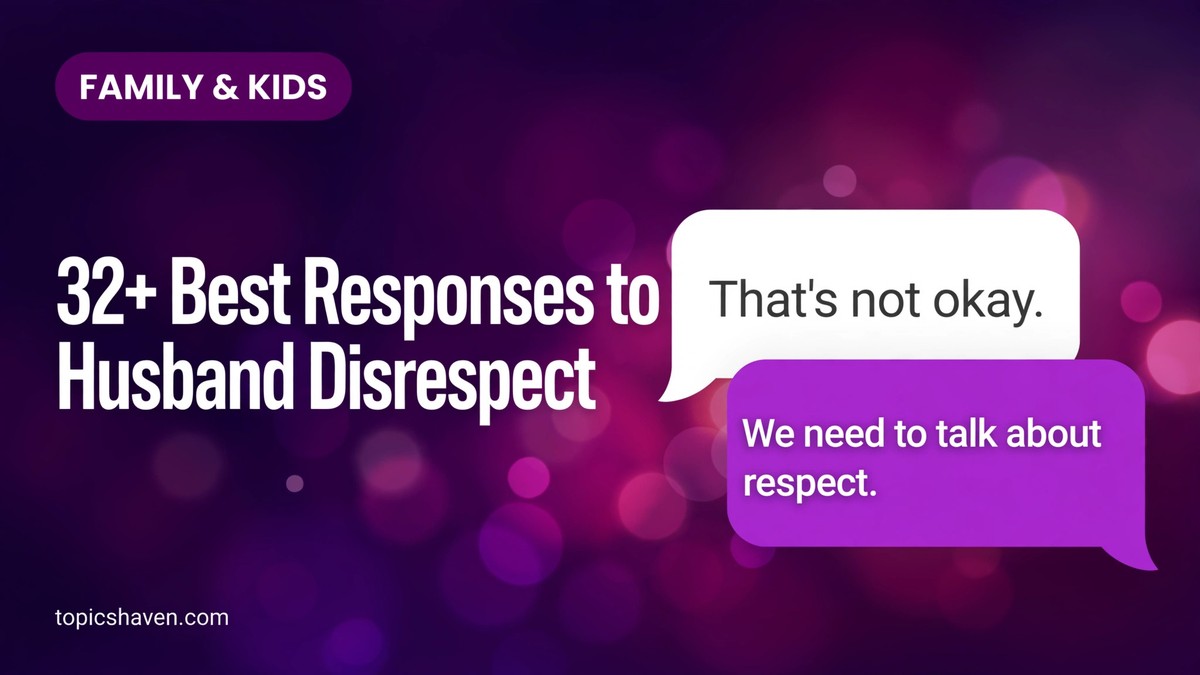
    When he talks over you, rolls his eyes at your words, or treats you like your feelings don’t count, it stings, so here are the 32+ Best Responses When Your Husband Disrespects You (100+ Examples), all about calm, firm boundary-setting you can actually say out loud. These aren’t insults thrown back or clever comebacks. They’re steady replies that name the behavior, hold your ground, and keep your dignity intact. For more ways to handle dismissive people in general, these responses when someone disrespects you have your back too.

    πŸ“Œ Jump to

    Calm Boundary-Setting Replies

    The goal here isn’t to win a fight, it’s to draw a clear line without raising your voice. A calm boundary tells him exactly what you will and won’t accept.

    1. “I’m not okay with being spoken to like that. Let’s try again.”
    2. “I need you to lower your tone before we keep talking.”
    3. “I’m willing to discuss this, but not while you’re being dismissive.”
    4. “If we can’t talk about this with respect, I’m going to step away for now.”
    5. “I love you, and that’s exactly why I need us to talk differently.”

    Replies That Name the Behavior

    Sometimes disrespect hides in eye rolls, sighs, and talking over you. Naming it out loud makes it real, and much harder to deny.

    1. “When you roll your eyes while I’m talking, it feels dismissive. Please don’t.”
    2. “You just talked over me. I’d like to finish what I was saying.”
    3. “That tone feels like contempt, and I won’t accept contempt in our marriage.”
    4. “Brushing me off every time I bring this up is its own kind of disrespect.”
    5. “When you mock what I care about, it hurts. I need you to hear that.”

    Here’s what it sounds like in real life:

    Him: “Oh, here we go again. Do you ever stop?”
    You: “I’m not going to argue with you about whether my feelings are valid. Let’s pause and talk when you’re ready to listen.”

    Firm Replies for Repeated Disrespect

    When it’s not a one-time slip but a pattern, your reply needs more weight. These lines attach a consequence, and mean it.

    1. “We’ve talked about this before. I need this to actually change now.”
    2. “I’m done pretending this doesn’t bother me. It does, deeply.”
    3. “Every time you dismiss me, it chips away at our marriage. I won’t ignore that anymore.”
    4. “If this keeps happening, I’d like us to talk to a counselor together.”

    Another real moment:

    Him: “You’re too sensitive. Nobody else has a problem with how I talk.”
    You: “This isn’t about sensitivity, it’s about respect. And in this marriage, I expect respect.”

    Replies to Stay Calm in the Moment

    Heat makes everything worse. These replies buy you time and keep your nervous system, and the conversation, steady.

    1. “I’m feeling flooded right now. I need twenty minutes, then we continue.”
    2. “Let’s both take a breath. I’m not saying another word in anger.”
    3. “I’m going to pause this conversation. We can revisit it calmly tonight.”
    4. “I hear that you’re upset. I’m upset too, so let’s slow down.”

    Short One-Line Boundaries

    Sometimes one sentence is all you need. Short, clear, and impossible to argue with.

    1. “That’s not okay.”
    2. “Talk to me with respect.”
    3. “I deserve better than this.”
    4. “We don’t treat each other this way.”

    Tips for Setting Boundaries With Calm Authority

    • Use I-statements, not accusations: “I feel dismissed when you interrupt me” lands far better than “You always disrespect me.” It describes your experience without putting him on trial.
    • Pick a calm moment to talk: Raising the issue mid-argument almost never works. Bring it up when you’re both settled, a morning coffee, a quiet evening, so he can actually hear you.
    • State the consequence, then follow through: “If you keep mocking me, I’ll leave the room” only works if you actually leave the room. Empty threats teach him your boundaries are optional.
    • Call a real timeout when you’re flooded: Research from the Gottman Institute shows that once your heart rate climbs past about 100 beats per minute, you stop taking in new information, taking a 20-minute break and truly calming down beats another hour of arguing, as these therapist-backed tips on setting conversational boundaries explain.
    • Know where disrespect ends and abuse begins: Occasional rudeness is a communication problem. A pattern of contempt, control, intimidation, or fear is abuse, and no reply on this page is a substitute for professional help or a safety plan.
    • Stay consistent: One firm boundary enforced every time is worth more than ten delivered once and forgotten. Consistency is what turns words into real change.

    Frequently Asked Questions

    What should I say when my husband is disrespectful but doesn’t think he is?

    Name the specific behavior in a calm moment: “When you rolled your eyes and said ‘here we go again,’ it felt dismissive.” People often don’t recognize their own contempt, so pointing to the exact words or gestures, not his character, gives him something real to respond to.

    How do I stay calm when my husband disrespects me?

    Slow your breathing and name what’s happening inside: “I’m feeling flooded.” If you can’t stay calm, pause the conversation and return in twenty minutes. Walking away to cool down is a boundary, not an escape, it protects both of you from words you’ll regret.

    When does a husband’s disrespect become emotional abuse?

    Disrespect becomes abuse when it’s a sustained pattern of contempt, control, threats, or intimidation that makes you feel afraid or worthless. If you recognize that pattern, reach out to a therapist, a trusted friend, or a domestic abuse helpline, setting a verbal boundary is not enough on its own in that situation.

    Final Thoughts

    Standing up to disrespect in your marriage isn’t disloyal, it’s one of the most loving things you can do for both of you. Pick the replies that feel true to your voice, deliver them calmly, and hold the line every single time. If the disrespect slides into outright verbal attacks, these responses when your husband calls you names can help. And when his anger is the real issue, these responses when someone is angry show you how to defuse it. For any tricky conversation, the free Reply Finder tool at Topicshaven has your back.
  • 25+ Best Responses When Your Husband Calls You Names (100+ Examples)

    25+ Best Responses When Your Husband Calls You Names (100+ Examples)

    25+ Best Responses When Your Husband Calls You Names (100+ Examples)

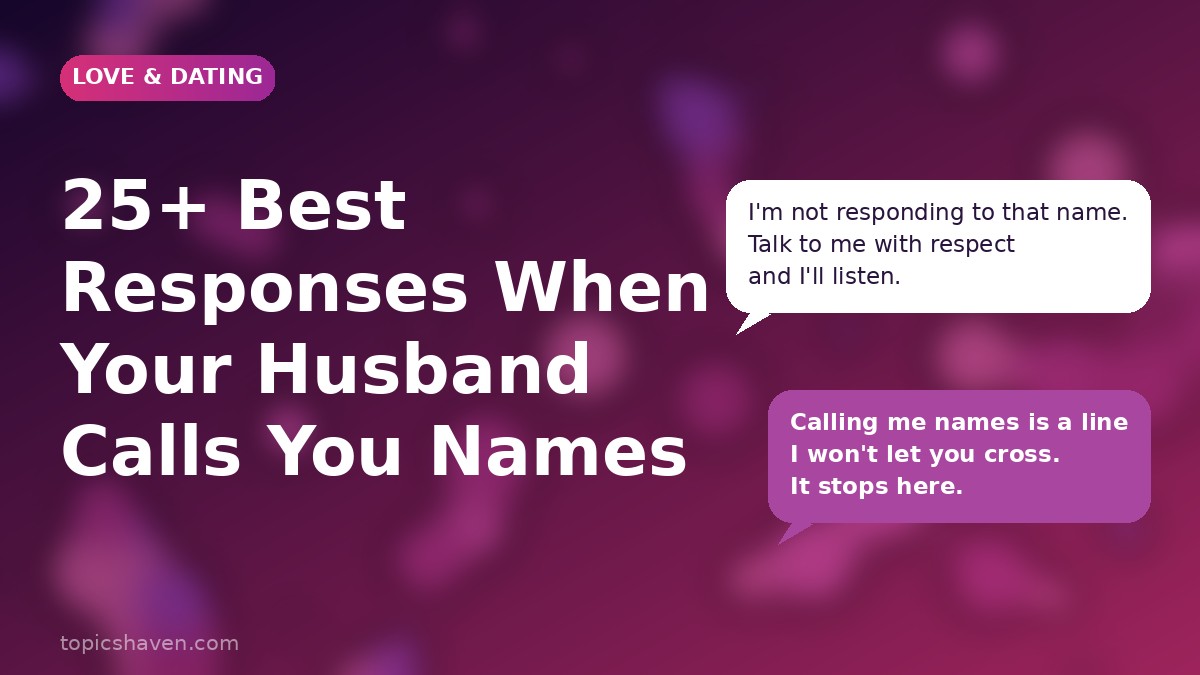
    Hearing a hurtful name from the person who promised to love and respect you can shake you to your core. These 25+ best responses when your husband calls you names give you calm, copy-ready lines that protect your dignity, set a clear boundary, and tell him exactly how you expect to be treated. Words matter, and you get to decide which ones are allowed in your marriage. For name-calling outside your relationship too, see our responses when someone disrespects you.

    πŸ“Œ Jump to

    Calm & Firm Replies That Refuse to Engage

    Your first response sets the tone for everything that follows. Staying calm isn’t weakness, it’s proof that his words don’t get to control you.

    1. “I’m not responding to that name. Talk to me with respect and I’ll listen.”
    2. “You can be upset with me, but you don’t get to call me that.”
    3. “That name doesn’t belong to me. Tell me what you actually mean.”
    4. “I hear that you’re angry, but I won’t accept it delivered with an insult.”
    5. “Pause. I’m happy to talk this through, just not like this.”

    Boundary-Setting Replies That Draw the Line

    A boundary isn’t an attack, it’s information. These replies name exactly what you will and won’t accept, spoken with love and total conviction.

    1. “Calling me names is a line I won’t let you cross. It stops here.”
    2. “If we can’t disagree without insults, we need to pause this conversation.”
    3. “I love you, and I still won’t accept being spoken to this way.”
    4. “Every time you call me that, it pushes us further apart. Choose differently.”
    5. “The name-calling ends now, or this conversation ends now, your choice.”

    Replies That Deflect with Dignity

    Sometimes the strongest move is refusing to give the insult any power. These replies sidestep the name and steer the talk back to the real issue.

    1. “Interesting word. Now tell me what you actually need from me.”
    2. “That says more about your mood than it does about me. Let’s reset.”
    3. “I’ll give you a do-over, what did you really mean to say?”
    4. “Labels don’t solve anything. What’s the real issue here?”

    Light Replies for Playful Teasing (Mutual Banter Only)

    These are only for the times you’re both laughing and the “names” are affectionate teasing you both enjoy. If it stings even a little, it’s not banter, use the replies above instead.

    1. “Careful, that’s my nickname for YOU, not me. πŸ˜„”
    2. “Wow, we’re doing nicknames now? Yours is ‘Grumpy.’ 😜”
    3. “I’ll allow it this once, if I get to name you too. Deal?”
    4. “Sweet of you to describe me with such… creative vocabulary. πŸ˜…”

    Stronger Replies When It Keeps Happening

    One insult can be a bad moment; a pattern is a problem. When you’ve asked him to stop and it keeps happening, it’s time to say so plainly, and mean it.

    1. “This keeps happening, and I can’t keep pretending it’s okay.”
    2. “You don’t get to call me names and then act like it never happened.”
    3. “I’ve asked you to stop. I need us to get help with this, or our marriage is going to break.”
    4. “If you can’t speak to me with respect, I’m stepping away until you can.”

    Tips for the Perfect Reply

    • Stay calm, not cold: A steady voice carries more power than shouting back. Calm says “I’m serious”; cold says “I’m punishing you.” Go for serious.
    • Use “I” statements: “I feel hurt when you call me that” lands better than “You’re so cruel.” It names the impact without starting a second fight.
    • Never fire back a name of your own: Trading insults feels equal in the moment, but it hands the pattern a partner. Be the one who refuses to play.
    • Have the big talk when things are calm: Addressing the name-calling mid-argument almost never works. Raise it over coffee, not in the heat of a fight.
    • Follow through on your boundary: If you say you’ll step away, actually step away. Boundaries only work when your actions match your words.
    • Learn from expert guidance on verbal disrespect: Therapists recommend naming the behavior calmly, setting firm boundaries, and getting support if it continues, see this guide on responding when your partner calls you names for a clear breakdown of each step.

    Frequently Asked Questions

    What should I say right after my husband calls me a name?

    Keep it short and steady: “Don’t call me that. Tell me what’s really bothering you.” One calm, direct correction is far stronger than a long defense or a tearful lecture.

    Is it ever okay for my husband to call me names in anger?

    No, anger explains the outburst, it doesn’t excuse it. Occasional slip-ups can be repaired with a real apology, but repeated name-calling is a form of verbal abuse. If it’s frequent or it’s eroding how you feel about yourself, please reach out to a counselor, a trusted friend, or a domestic-abuse support line for help.

    What if he keeps calling me names after I’ve asked him to stop?

    Then words alone aren’t working, and the next step is action: leave the room, pause the conversation, or suggest couples counseling together. If he refuses to change, talk to a therapist on your own, a professional can help you decide what a healthy path forward looks like for you.

    Final Thoughts

    You married a partner, not a punching bag for his bad moods. Respond with calm strength, hold your boundary every single time, and don’t apologize for expecting respect. And when hurtful words come from anyone else too, these responses when someone says something mean will help you answer with dignity. For any tricky conversation, the free Reply Finder tool at Topicshaven has your back.